The bedroom, calm and total darkness
Three conditions for the bedroom to do its job
The bedroom is not a room like the others. It has a single function, to sleep. Everything must converge towards this goal.

How do you optimise a bedroom for sleep?
Make the room converge on one function, sleep, through three priority conditions: total darkness (blackout curtain, no stray light), acoustic calm (thick rug, heavy curtains, padded headboard) and coolness, between 16 and 19 °C. Banish screens and any desk.
§ 01The principle
The bedroom is not a formal reception room nor an office nor a secondary living room. Its function is unique, to enable sleep and rest. Everything, from the furniture to the palette via the lighting and the textiles, must converge towards this function.
Three conditions are essential, in order of priority.
Total darkness. The room must be capable of being plunged into complete darkness. Blackout curtain essential (see rule 06.3). No stray light (charger LED, lit alarm screen, street lamp filtering through).
Acoustic calm. The bedroom must be insulated from noise, as much as possible. Absorbent textiles (thick rug, heavy curtains, padded headboard), door closed at night.
Thermal coolness. The ideal sleep temperature is 16 to 19°C. Warmer, sleep is of lower quality.
To these conditions are added the principles of the soothing bedroom, neutral or dark palette (see rule 01.8), centred bed (rule 03.5), few objects, no visible screens.

Total darkness · Acoustic calm · 16-19°C
Three conditions, and the bedroom does its job.
§ 02Putting it into practice
Obtaining total darkness.
Blackout curtain. See rule 06.3. Combine with a sheer for daylight. Dark colour to absorb light (midnight blue, charcoal grey, navy).
Check the absence of stray light. Cover the LEDs of chargers, switch off screens at night, mask windows with blackout lining if the exterior is lit.
External shutters or blinds. If your curtains are not enough (strong overlooking, street lamps), consider external rolling shutters (£1,300-2,500) which complete the blackout.
Optimising acoustic calm.
Thick rug on the floor. Wool or boucle, which absorbs sounds (see rule 06.2). Reduces resonance and softens footsteps.
Heavy curtains. Velvet or lined heavy cotton, which absorb sounds coming from outside.
Padded headboard. Absorbent material (velvet, boucle, heavy linen). Reduces acoustic transmission towards the wall.
Bookcase or furniture against the wall shared with a noisy room. Solid furniture (bookcases filled with books, wardrobes) are excellent acoustic insulators.
Earplugs or white noise machine. Complementary solutions if the environment is very noisy.
Obtaining thermal coolness.
16 to 19°C is the ideal zone for sleep quality. Most bedrooms are too warm (21-23°C at night).
Reduce the heating at night. Programme the bedroom radiator 2-3°C below the other rooms.
Brief airing before going to bed. 5-10 minutes window open just before sleeping, which cools the room.
Adapted bedding. Washed linen is temperature-regulating (see rule 06.6).
No screens in the bedroom.
This is a sleep quality rule, more than a decorating one. But it impacts the layout. No TV facing the bed (a classic to avoid), no desk close to the bed with an open computer. The bedroom is a sanctuary, not a secondary office.
In a small interior. In a studio, the day/night separation is crucial. The bed must be in the calmest and darkest zone. A screen, a bookcase, a separating curtain can create the night sanctuary even in a single space.
- 01Install blackout curtains imperatively
- 02Invest in a thick rug and absorbent textiles
- 03Maintain the bedroom at 16-19°C at night
- 04Banish screens and the desk from the bedroom
- 01A bedroom lit by external street lamps all night
- 02A TV facing the bed, which stimulates instead of soothing
- 03A bedroom at 23°C in winter, poor sleep guaranteed
- 04Multiplying decorative objects as in a living room
§ 03Professional variations
Premium hotels master these three conditions thoroughly. Sleep is their product. Triple-thickness curtains, thick rugs, programmable air conditioning at 18°C, no stray light. The standard bedroom of an Aman or a Mandarin Oriental is a bedroom optimised for sleep.
Pierre Yovanovitch works bedrooms as monastic sanctuaries. Minimal furniture, neutral or dark palette, dim indirect light, no screens. An effect of deep retreat.
For chronic insomniacs, some specialists recommend completely redefining the bedroom as a pure sleep zone. No use other than sleeping and making love. The bedroom conditions you psychologically to sleep, it is a tool.
Darkness, calm, coolness, and the bedroom does its job.
---
For this rule
 Rideau occultant Scenario · La Redoute Intérieursthe reliable blackoutSee
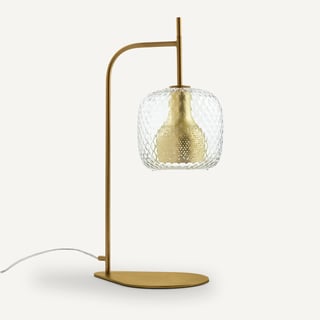 Lampe à poser Mistinguett laiton & verre · AM.PMthe soft evening lightSee
- Lampe de chevet Folio laiton mat · Maisons du Mondethe affordable one, gold touchSee
Affiliate links · See our transparency →
And in your room — is this rule respected?
Photograph your room. The AI checks it against all 114 rules of the manual and returns the concrete fixes to apply this weekend.
Audit my roomFree, no sign-up. Analysed in under a minute.
Blackout curtains in bedrooms, sheer in living rooms
A window is treated differently depending on the room's use
03.5The bed centred on the main wall
The symmetry rule that turns any bedroom into a calming one
02.8Indirect lighting behind the TV or headboard
The invisible LED strip that transforms a room in 20 minutes
One measured rule, every Tuesday.
Good measurements are worth keeping. Get The Bulletin: one décor rule explained in depth, Tuesday morning. Four minutes, zero noise.