Mix at least three textures per room
A room with only one material always feels cold, even with the right colours
Three colours are not enough. A correct palette without material variation stays flat. The three-texture rule is the silent twin of 60/30/10.

Why does my room feel flat and cold despite the right colours?
Because it lacks materials. Mix at least three textures, one per family: smooth (glass, marble, metal, leather), soft (velvet, boucle, wool) and rough (coarse linen, jute, raw wood). This material variation, more than the palette itself, is what gives a room depth.
§ 01The principle
A room is built not just with colours, but with materials, perceived by the eye even when the palette is sober. A single-material room, even well coloured, feels cold and flat, because there is nothing for the gaze and touch to catch on.
The professional rule: at least three different textures in every living space. This is the vital minimum. Five or six is better, but three already gives depth.
Textures fall into three main families: smooth (glass, polished marble, metal, leather), soft (velvet, boucle, wool, mohair), and rough or textured (coarse linen, jute, raw wood, exposed stone, sisal). The rule applies primarily to materials visible across both large surfaces (sofa, rug) and accents (cushions, vases, throws).
This rule applies equally in small interiors, where it is even more important. When space is limited, richness of materials is what prevents the room from feeling impoverished.
To apply this rule: See selectionAffiliate

Three textures minimum per room · One per family (smooth, soft, rough)
Without material variation, the room stays flat regardless of the colours.
§ 02Putting it into practice
Identify the textures already present. List everything: walls (matt or satin, essentially smooth), floor (parquet, tile, each has its texture), main furniture (velvet, leather, linen sofa), rugs (jute, wool, boucle), curtains, cushions, objects (ceramic, glass, wood, metal). If you count fewer than three different families, your room lacks textural richness.
Three combinations that almost always work.
Classic warm combination. Linen sofa (rough), velvet armchair or headboard (soft), marble table or tray (smooth). Enveloping and refined effect.
Nordic pared-back combination. Boucle sofa (soft), jute rug (rough), smoked glass or matt black metal coffee table (smooth). Contemporary, luminous effect.
Raw Mediterranean combination. Coarse linen bench (rough), velvet cushions (soft), stone or travertine table (smooth). Authentic and sunny effect.
Adding a fourth texture. Patinated wood (antique oak, walnut) is the universal ally, adding to any of the three combinations and bringing warmth.
In small interiors. Concentrate textures on the few pieces you have. Linen sofa, velvet cushions, boucle throw, raw ceramic vase: the studio immediately feels rich.
- 01Count at least three distinct textures per room
- 02Mix one material per family (smooth, soft, rough)
- 03Add patinated wood as the universal fourth texture
- 04Concentrate textures in small interiors rather than dispersing them
- 01A room entirely in velvet or leather (costume effect)
- 02Sofa, armchairs and curtains all in the same fabric
- 03Confusing material and colour in the texture count
- 04Buying everything matching in the same material
§ 03Professional variations
Axel Vervoordt is probably the undisputed master of textural richness. His neutral palettes often include six to eight different materials in the same room, concentrated on raw and natural materials: linen, hemp, plaster, stone, patinated metals, raw wood.
Pierre Yovanovitch almost always works four textures per room, with a signature: ribbed velvet on a statement armchair, contrasting with the linen sofa and the black metal structure.
Studio KO integrates local artisan textures as an additional material in their Mediterranean interiors: raw Berber pottery, tightly woven kilim rugs, hand-dyed hemp fabrics. Texture becomes geography.
Three textures minimum, or the room stays flat whatever else you do.
---
For this rule
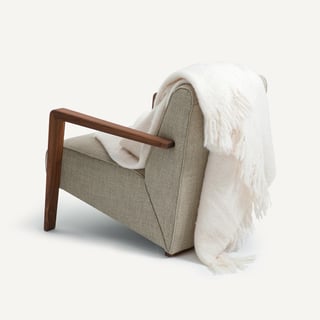 AM.PM - Plaid laine Mantasthe beautiful one, in woolSee
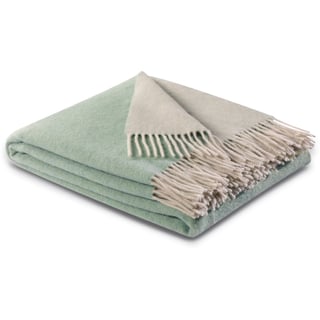 La Redoute - Plaid laine cachemire Clarencethe affordable one, cashmereSee
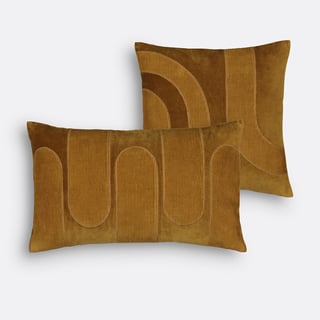 La Redoute - Housse coussin velours Brimovelvet texture, casualSee
Affiliate links · See our transparency →
And in your room — is this rule respected?
Photograph your room. The AI checks it against all 114 rules of the manual and returns the concrete fixes to apply this weekend.
Audit my roomFree, no sign-up. Analysed in under a minute.
One measured rule, every Tuesday.
Good measurements are worth keeping. Get The Bulletin: one décor rule explained in depth, Tuesday morning. Four minutes, zero noise.