Low furniture in small rooms
The lower the furniture, the larger the room appears
A tall bookcase crushes a small room. Low furniture lets it breathe. The rule is simple: furniture follows the eye line.

How do you make a small room look bigger with furniture?
In a room under 20 m², favour low furniture below 90 cm: a sofa with a 75-80 cm back, a slim coffee table, a low bookcase and chest. The eye travels from floor to 90 cm then up to the ceiling, enlarging the room. Add a few vertical lines to balance it.
§ 01The principle
The height of furniture determines the perceived height of the room. The taller the furniture, the lower the room appears. The lower the furniture, the more the room appears to breathe.
This rule complements rule 03.13 (furniture scale based on ceiling height). But it also applies when you want to visually enlarge a room, independently of the actual ceiling height.
The professional rule: in a small or medium-sized room (under 20 m²), systematically favour low furniture. Low sofa, slim coffee table, low bookcase, low chest of drawers. Everything that stays under 80-90 cm in height.
The eye then travels the room from floor to 90 cm, then continues freely up to the ceiling. This clear zone above the furniture gives the impression of a taller room.
To apply this rule: See selectionAffiliate

Small room → low furniture (≤ 90 cm height)
The top of furniture never exceeds seated eye level.
§ 02Putting it into practice
Choosing furniture by height.
Low sofa. Back at 75-80 cm total height. Brands like Muuto Outline, &Tradition Develius. Avoid high-backed sofas (1 m and above), which crush small rooms.
Slim coffee table. 30-40 cm height. Avoid heavy coffee tables with thick tops.
Low bookcase. Maximum 1.20 m height (see rule 03.12). Beyond that, either it goes to the ceiling, or it has no place in a small room.
Low chest of drawers. 70-80 cm height. Avoid tall chests of drawers or vertical dressers.
Low headboard. 70 cm above the mattress, no more (see rule 03.6).
Desks and chairs. Standard height is fine, but avoid vertical school-style desks that take up all the height.
Compensating for verticality elsewhere.
If you give up tall furniture, you must compensate for verticality with other elements. Tall framed artworks on the wall (see rule 07.3). Floor-to-ceiling curtains (see rule 05.2). A large vertical mirror.
The idea is not to "flatten everything", but to clear the upper zone of the eye line while keeping strong vertical lines elsewhere.
- 01Favour low furniture (under 90 cm) in small rooms
- 02Compensate with vertical lines (curtains, tall artworks)
- 03Choose sofas with a low back (75-80 cm)
- 04Keep the zone above furniture visually clear
- 01A 2.20 m tall bookcase in a 14 m² living room
- 02Multiplying "medium" furniture (1.40 to 1.80 m), which creates a dead zone
- 03Giving up all verticality, which flattens the room
- 04Confusing "low furniture" with "small furniture"
§ 03Professional variations
Japanese interior architects work almost exclusively with low furniture (floor-level seating like tatami, futons, low tables). It is this discipline that makes traditional Japanese interiors so airy despite their small surfaces.
Pierre Yovanovitch alternates between the two logics depending on the room. Low furniture in bedrooms and intimate living rooms, floor-to-ceiling furniture in libraries and formal salons.
Small room, low furniture, eye free toward the ceiling.
---
For this rule
 AM.PM Otavia · canapé toile chinéethe centerpieceSee
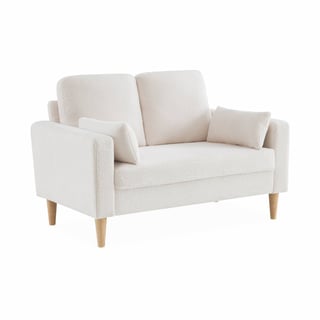 Bjorn · 2 places hévéa bouclettethe smart moveSee
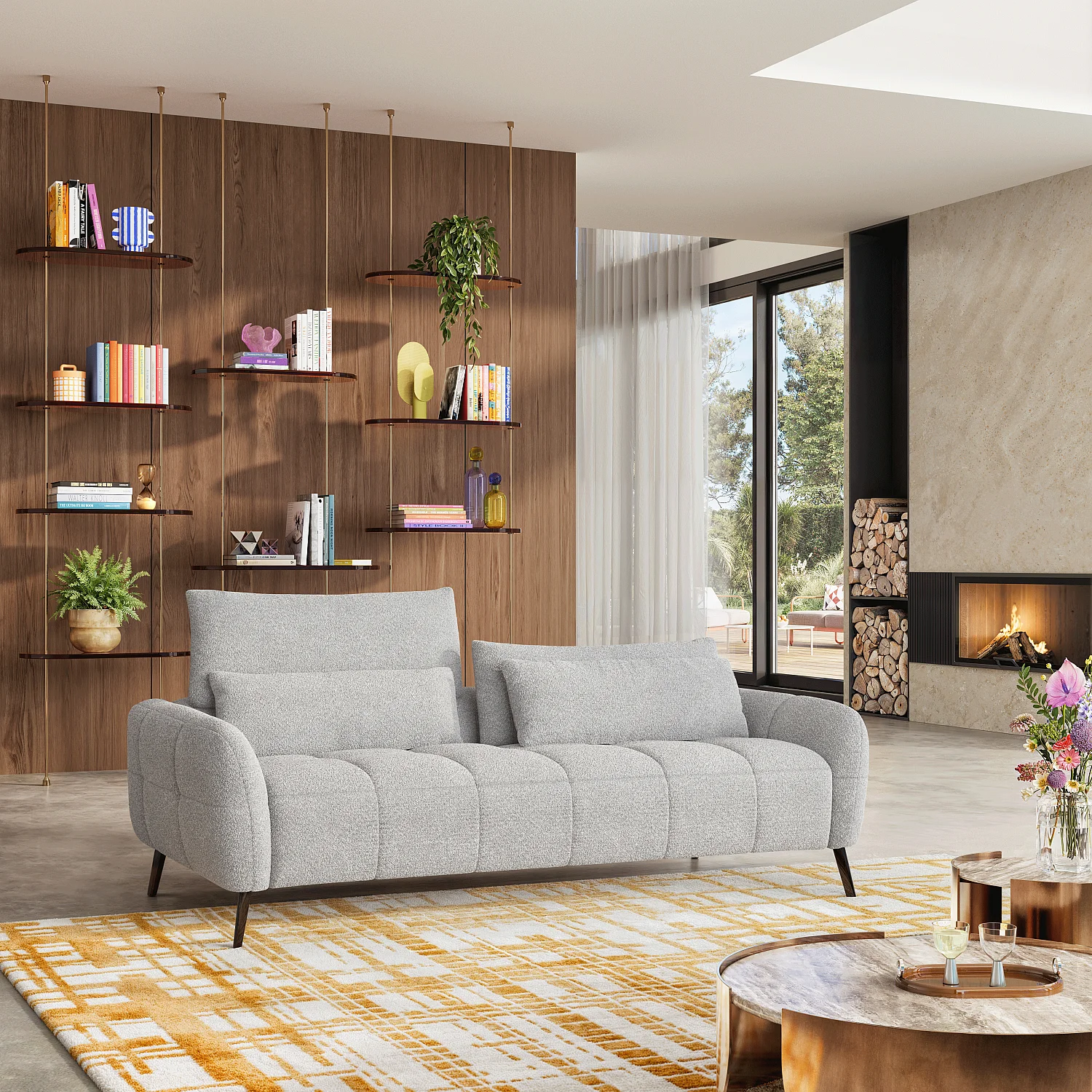 Habitat Doci · canapé bouclette courtethe affordable one, cocooning feelSee
Affiliate links · See our transparency →
And in your room — is this rule respected?
Photograph your room. The AI checks it against all 114 rules of the manual and returns the concrete fixes to apply this weekend.
Audit my roomFree, no sign-up. Analysed in under a minute.
Furniture scale based on ceiling height
Low furniture in low rooms, tall furniture in tall rooms
03.1The sofa is two thirds of the wall length
The proportion rule that rescues half of all badly proportioned living rooms
03.12The ideal height of a bookcase
Floor to ceiling, or nothing, but above all not in between
One measured rule, every Tuesday.
Good measurements are worth keeping. Get The Bulletin: one décor rule explained in depth, Tuesday morning. Four minutes, zero noise.