Buy on Selency intelligently
The user manual for online thrifting without getting caught out
Selency has become the benchmark for online thrifting. Here is the user manual for buying intelligently.
Selency Selency has become the reference platform for online thrifting in France. Both professionals and individuals sell there. Here is how to buy without getting caught out.
1. Understand the two tiers of seller
The professionals (flea-market traders, antique dealers). Curated pieces, restored, properly photographed. Higher prices (often 30-50% above the direct market), but guaranteed quality and aftersales.
The individuals. Pieces often cheaper but variable quality. Photos sometimes dubious, negotiation possible.
How to tell them apart. The seller's profile shows their status. Pros often have several hundred sales, with reviews.
2. Always check these 5 points
The dimensions. Measure the available space at home before any infatuation. A "magnificent" chest of drawers that does not fit through your door is useless.
The condition. Read the full description. "Patina of use" = visible marks, "very good condition" = near perfect, "original condition" = can be average. Ask for extra photos if in doubt.
The provenance. French, Italian, Scandinavian piece? It influences value and style.
The delivery charges. Very expensive on Selency (often £80-300 for a standard piece, up to £800 for an imposing sideboard delivered nationally). To budget for before finalising.
The collection option. If the seller is 50 km from you, collection in person saves the delivery charges.
3. The fair-price rule
**Compare with Le Bon Coin Le Bon Coin and Emmaüs Emmaüs.** The same piece often exists elsewhere at 30-50% less (but with less care, photos, restoration).
Compare with the new equivalent. If the piece costs £600 thrifted and £700 new (similar style), the advantage of thrifting disappears.
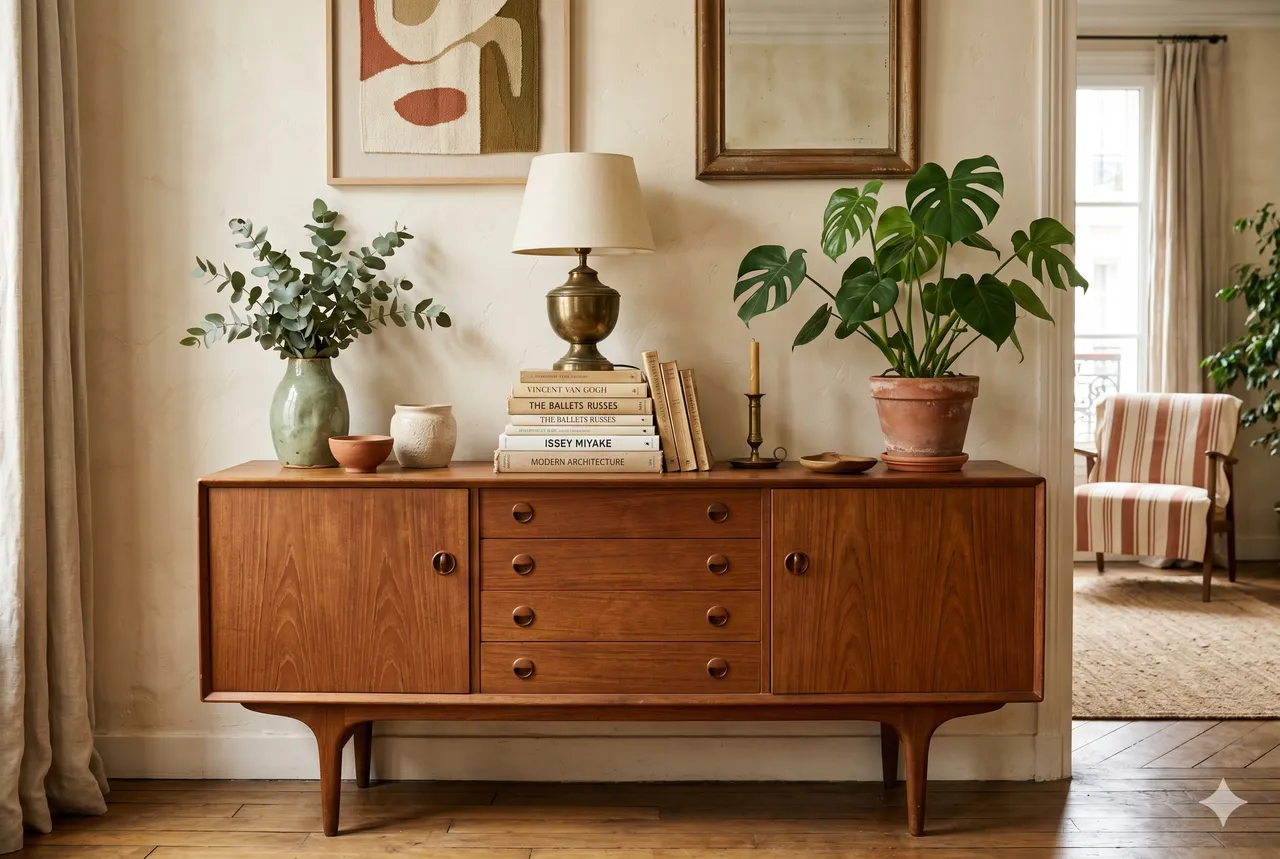
Look at price history. On Selency, you can see similar pieces sold. A 1950s teak sideboard at £800 may be justified; the same at £1,500 is overpriced.
4. Negotiate (sometimes possible)
On Selency, a "Make an offer" button on certain listings. For pieces that have been online for 30+ days, you can propose 70-80% of the asking price.
For individuals, negotiation is easier. For pros, rarer but possible on "wallflower" pieces (those that are not selling).
5. The golden rule, live 48 h with the photo
Before any significant furniture purchase, save the photo and live with it 48 h. Print it out or display it on a screen where the piece would sit. The infatuation sometimes disappears.
Bonus, the Selency aftersales
Selency guarantees conformity with the description. If the piece arrives damaged or non-conforming, you have 14 days to return it (return charges generally at your cost). Read the precise conditions before any significant purchase.
## Key takeaways
Selency is an excellent platform, but demands rigour. 5 systematic criteria (dimensions, condition, provenance, delivery, collection), comparing three sources (Selency, Le Bon Coin, Emmaüs), living 48 h with the photo before buying. The rule, never buy on impulse without checking (see rule 01.3 on paint, which also works for furniture).